One platform. Three seats at the table.
Owners run the businesses, firms run the books, advisors review the structure. Totter gives each of them the same truth — with entity boundaries that hold at the ledger.
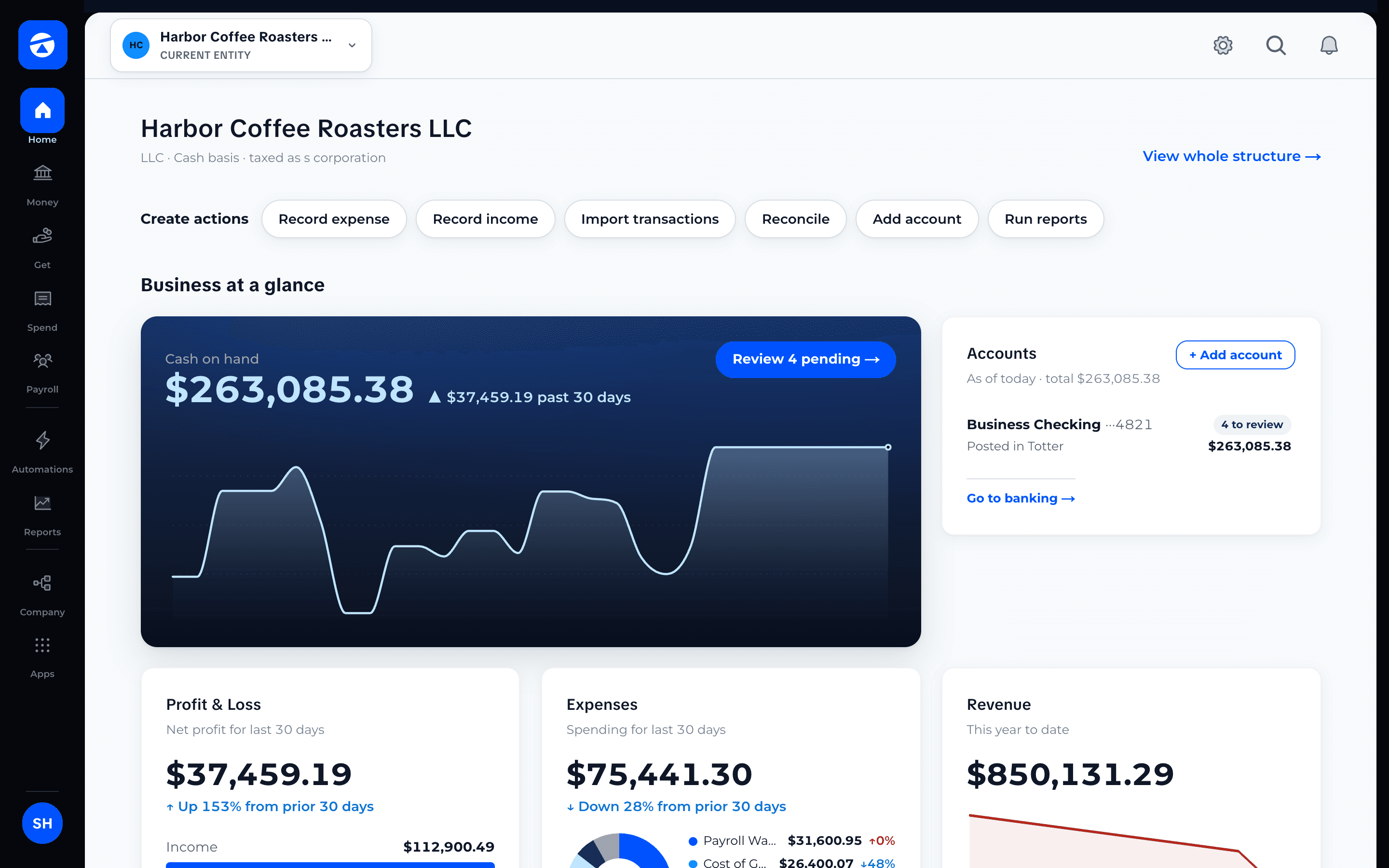
Founders and owners
Start one, or bring over the ones you have.
Totter forms the company, gets the EIN, opens the bank account and keeps the books — then tracks every filing deadline so none of them reaches you as a surprise. Add the next company and it lands in the same place, with its own ledger.
- Formation, EIN and registered agent, or move the agent you already have
- Filing calendar per company — annual reports and franchise tax, tracked and filed
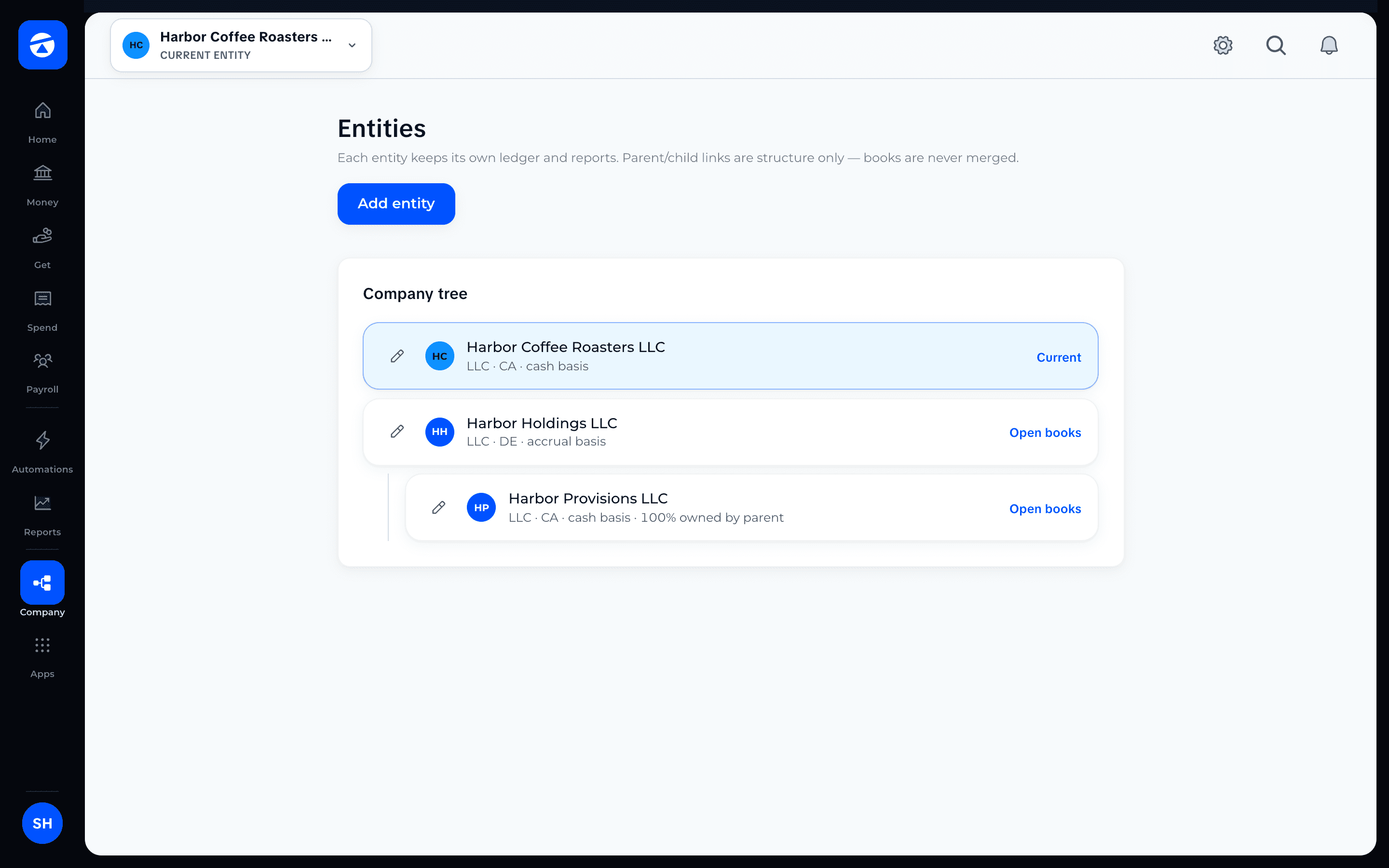
- Company tree with ownership percentages and enterprise rollups
- Invoices, bills, budgets, recurring transactions, and 1099 tracking per entity
- Intercompany transfers matched and booked on both sets of books in one step
- KPIs that show their derivation and a cash flow planner linked to recurring activity
Accounting firms
Your firm queue, already sorted.
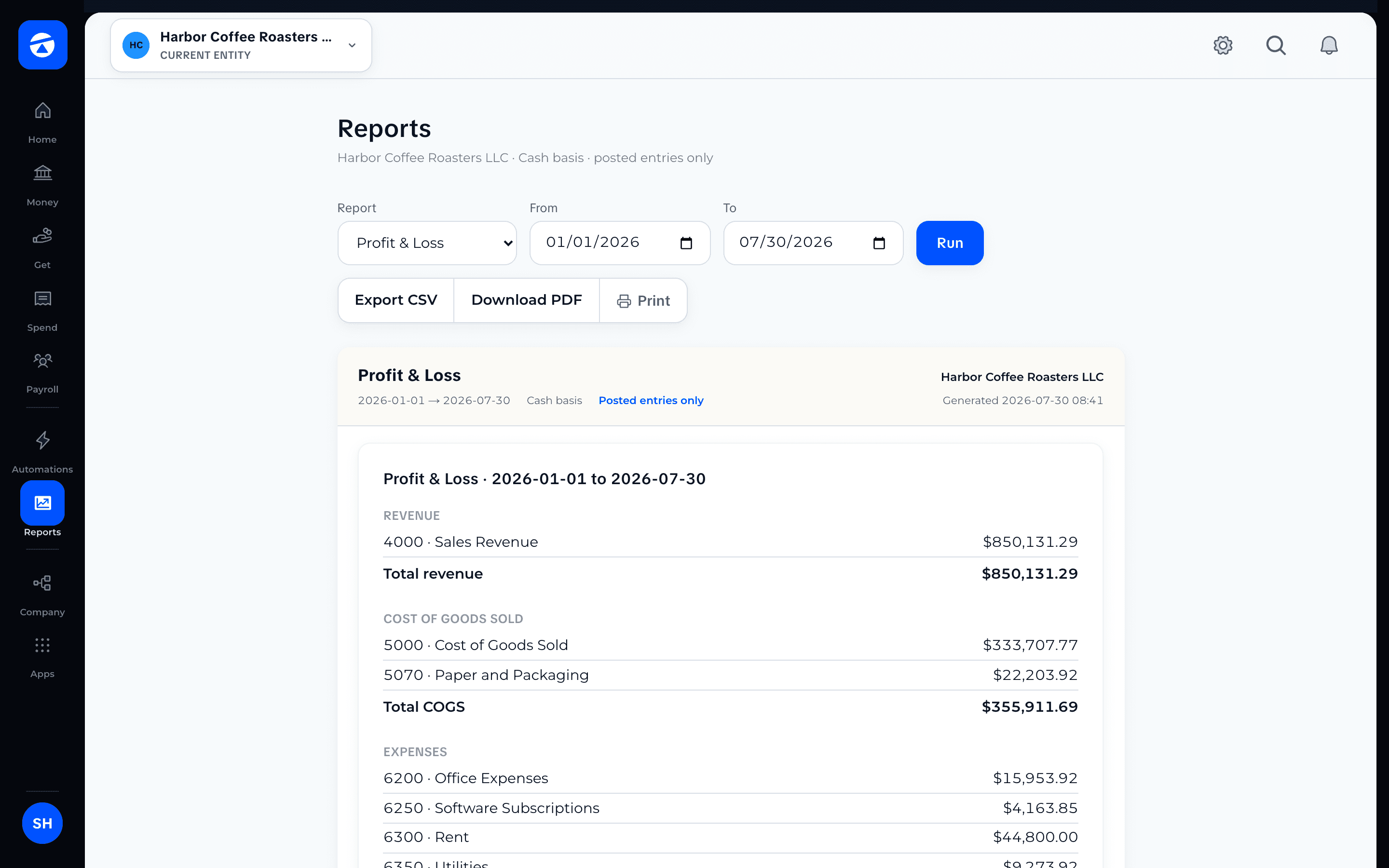
A client workbench that protects entity boundaries, organizes review work, automates safe repetition, and leaves a reliable audit trail. Client books never blur into each other.
- A practice queue across every client, sorted by what needs review
- Bulk review worktables: search, filter, inline edit, and post in batches
- Report packets and general ledger and trial balance exports
- Rules that explain themselves — every suggestion names its source
Advisors
Structure made visible, without merging books.
Totter makes business structure reviewable without blurring liability boundaries or pretending software is final tax or legal advice. Advisory prompts point at the records behind them and stay in review-with-your-CPA language.
- The whole ownership map, with each entity's books kept separate
- Advisory prompts that cite the underlying records
- Entity-scoped access for every advisor seat
- Reports labeled with basis, period, and data status
QuickBooks does not get replaced. It gets absorbed.
Import your file and keep the same transactions, the same categories, and the same account numbers, now in live books. Your categorization history becomes rules on the live feed.